


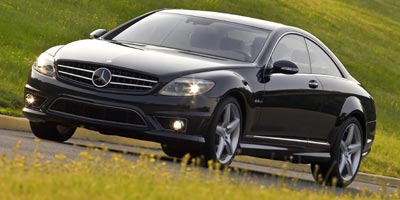

South Africa might seem a strange place to launch a 200-mph exotic sports-GT car that will find owners mainly in the U.S. and western Europe. More so when you consider that the most significant achievement by an SLR model was in Italy, at the Mille Miglia event of 1955. But Mercedes-Benz
has conducted operations in South Africa for more than 45 years, including complete vehicle assembly. More important, the weather in mid-November is fabulous.

Piloting these left-drive-only coupes in a right-hand-drive market took only a short adjustment, leaving us free to enjoy the SLR’s addictive power against the spectacularly scenic backdrop of the Cape mountains. The audio soundtrack wasn’t bad, either, with a muted but shrill scream of a twin-screw Lysholm blower accompanying a distinctly staccato roar from the 617-hp V-8’s side pipes every time the driver stabbed the pedal.
Each of the engine’s cylinder banks enjoys a stream of condensed intake air from separate intercoolers, together producing a torque curve quite similar to the profile of Cape Town’s Table Mountain. There is already 440 pound-feet of torque by 1500 rpm, and well over 500 pound-feet between 3000 and 5000 rpm. This lends mind-boggling elasticity to the SLR, with passing performance that has to be felt to be appreciated.
 We’ve become fairly accustomed to huge output from AMG-built engines, but most of those are housed in conventional steel models weighing quite a bit more than the 3800-pound, carbon-fiber-bodied SLR. This isn’t exactly svelte when one considers that carbon fiber weighs half as much as steel. Mercedes claims 3.8 seconds for the 0-to-60-mph scramble, and we think that might be a conservative estimate.
The carbon-fiber structure, produced in an all-new facility in Woking, England, is the real story of the SLR, and it celebrates the relationship between Mercedes-Benz
and McLaren in the Formula 1 circus. Under McLaren’s management, this new plant conducts the high-tech assembly procedures that will give birth to 3500 examples of the SLR over the next seven years.
This carbon-fiber road car exploits that material’s amazing strength and feathery weight for high performance and safety. The entire body is a composite molding, with beautiful front and rear aluminum subframes bolted and bonded to the tub to mount the engine and undercarriage. Below the tub is a completely flat underbody.
When you flip open the long clamshell hood, it’s a surprise to see how little of the exposed interior is filled by the engine. For optimal weight distribution (the percentage, front to rear, is 51/49), the engine protrudes only two or so feet forward of the base of the windshield. Ahead of that is a monstrous snorkel reaching for cool air rushing in around the three-pointed star.
Other neat features visible under the hood are the forged-aluminum double control arms, along with an anti-roll bar mounted above the suspension and torqued by a Formula 1–style rocker assembly.

At each end of the car are conical crash members made of 25,000 carbon-fiber filaments wound from 48 reels using techniques developed by the textile industry. As exhibits from crash tests proved, these crash members provide remarkable absorption and resistance to impact damage.
The composite body is palpably stiff to the car’s occupants, never emitting a squeak or groan on the worst surfaces, despite a suspension on the firm side. Those A-pillar-mounted gullwing doors—opening to 107 degrees and attracting hordes of onlookers—would undoubtedly betray deficiencies in the structure if there were any.
The inside of the SLR is as exotic as the Batmobile exterior, with carbon-fiber seat shells covered in fine leather and a cockpit built of contrasting colors and textures. To start the SLR, you turn the stubby key, flip a cover at the top of the gear selector, and thumb the button that hides there to bring the 5.4-liter V-8 rumbling to life.
 Mercedes’ strongest five-speed automatic (with manual override) still required internal reinforcements to handle the enormous horsepower of the SLR. It offers three levels of transmission performance—comfort, sport, and manual. In manual mode, the box shifts only in response to the wheel-mounted buttons or a side swipe at the selector, and it has an additional three levels of response and shift speeds set by yet another rotary knob.
We like that this manumatic can be made fully responsive to the driver, turning the automatic box into something very like the paddle-shift system in Ferraris and allowing you to hold gears for corner entries and such. We like the electronic braking system less. There’s an initial dead zone in the pedal travel, and one instinctively feels for the usual hydraulic takeup point, whereupon the giant eight-piston front calipers take a firmer bite on the 14.6-inch ceramic discs than you’d planned.
 Other than that, the SLR is largely devoid of the syrupy control feel that coats most Mercedes cars. Its steering is deliberate and linear, the power delivery smooth but somehow raw, the ride firm and immediate. There’s quite a bit of grip from the made-to-order Michelin Pilot Sport tires, abetted by a McLaren-tuned chassis and Mercedes-Benz’s electronic stability program, which—for once—has a pretty high threshold. A pity it still steps in so intrusively, but with so much potential and so much value in the car, maybe that’s a good thing.
There were mixed reactions to the SLR’s styling at its first appearance, but the positive response by potential buyers now suggests that every example will find a home.
has conducted operations in South Africa for more than 45 years, including complete vehicle assembly. More important, the weather in mid-November is fabulous.
Piloting these left-drive-only coupes in a right-hand-drive market took only a short adjustment, leaving us free to enjoy the SLR’s addictive power against the spectacularly scenic backdrop of the Cape mountains. The audio soundtrack wasn’t bad, either, with a muted but shrill scream of a twin-screw Lysholm blower accompanying a distinctly staccato roar from the 617-hp V-8’s side pipes every time the driver stabbed the pedal.
Each of the engine’s cylinder banks enjoys a stream of condensed intake air from separate intercoolers, together producing a torque curve quite similar to the profile of Cape Town’s Table Mountain. There is already 440 pound-feet of torque by 1500 rpm, and well over 500 pound-feet between 3000 and 5000 rpm. This lends mind-boggling elasticity to the SLR, with passing performance that has to be felt to be appreciated.
The carbon-fiber structure, produced in an all-new facility in Woking, England, is the real story of the SLR, and it celebrates the relationship between Mercedes-Benz
and McLaren in the Formula 1 circus. Under McLaren’s management, this new plant conducts the high-tech assembly procedures that will give birth to 3500 examples of the SLR over the next seven years.
This carbon-fiber road car exploits that material’s amazing strength and feathery weight for high performance and safety. The entire body is a composite molding, with beautiful front and rear aluminum subframes bolted and bonded to the tub to mount the engine and undercarriage. Below the tub is a completely flat underbody.
When you flip open the long clamshell hood, it’s a surprise to see how little of the exposed interior is filled by the engine. For optimal weight distribution (the percentage, front to rear, is 51/49), the engine protrudes only two or so feet forward of the base of the windshield. Ahead of that is a monstrous snorkel reaching for cool air rushing in around the three-pointed star.
Other neat features visible under the hood are the forged-aluminum double control arms, along with an anti-roll bar mounted above the suspension and torqued by a Formula 1–style rocker assembly.

At each end of the car are conical crash members made of 25,000 carbon-fiber filaments wound from 48 reels using techniques developed by the textile industry. As exhibits from crash tests proved, these crash members provide remarkable absorption and resistance to impact damage.
The composite body is palpably stiff to the car’s occupants, never emitting a squeak or groan on the worst surfaces, despite a suspension on the firm side. Those A-pillar-mounted gullwing doors—opening to 107 degrees and attracting hordes of onlookers—would undoubtedly betray deficiencies in the structure if there were any.
The inside of the SLR is as exotic as the Batmobile exterior, with carbon-fiber seat shells covered in fine leather and a cockpit built of contrasting colors and textures. To start the SLR, you turn the stubby key, flip a cover at the top of the gear selector, and thumb the button that hides there to bring the 5.4-liter V-8 rumbling to life.
 Mercedes’ strongest five-speed automatic (with manual override) still required internal reinforcements to handle the enormous horsepower of the SLR. It offers three levels of transmission performance—comfort, sport, and manual. In manual mode, the box shifts only in response to the wheel-mounted buttons or a side swipe at the selector, and it has an additional three levels of response and shift speeds set by yet another rotary knob.
We like that this manumatic can be made fully responsive to the driver, turning the automatic box into something very like the paddle-shift system in Ferraris and allowing you to hold gears for corner entries and such. We like the electronic braking system less. There’s an initial dead zone in the pedal travel, and one instinctively feels for the usual hydraulic takeup point, whereupon the giant eight-piston front calipers take a firmer bite on the 14.6-inch ceramic discs than you’d planned.
 Other than that, the SLR is largely devoid of the syrupy control feel that coats most Mercedes cars. Its steering is deliberate and linear, the power delivery smooth but somehow raw, the ride firm and immediate. There’s quite a bit of grip from the made-to-order Michelin Pilot Sport tires, abetted by a McLaren-tuned chassis and Mercedes-Benz’s electronic stability program, which—for once—has a pretty high threshold. A pity it still steps in so intrusively, but with so much potential and so much value in the car, maybe that’s a good thing.
There were mixed reactions to the SLR’s styling at its first appearance, but the positive response by potential buyers now suggests that every example will find a home.


